THE STORY’S HISTORY
History credits “Taps” to General Daniel Butterfield and his bugler, Oliver Willcox Norton, at Harrison’s Landing in July 1862, and to Captain John Tidball with first sounding it over a grave. This novel keeps those names and imagines the hands that came before them.
Before the Bugle
Almost every American knows the twenty-four notes, even those who could not name them. They are sounded at the end of things: over a flag folded into a triangle, across a cemetery where no one is moving. When Michael Gill was seven, he asked his father, a career Air Force fighter pilot, where the song came from. His father had heard it at funerals several times before, and he did not know.
America’s Unfinished Song imagines an answer. It isn’t a general at a tent desk. It’s a back room in Richmond, a garden wall, a train car, letters crossing a nation as it comes apart, and a handful of people whose names history never wrote down.
The novel opens with the author attending a funeral with his family. Then it steps back a century, to Philadelphia on the eve of the Civil War. Caleb Mackullman, the eldest son of an Irish immigrant woodworker, sits beside his five-year-old sister, Nora, at the family piano, correcting a tune she has invented. She insists the note he dislikes isn’t wrong. He agrees that it only means “the song wasn’t finished.”
When a worried letter arrives from relatives who run the family’s furniture-and-music shop in Richmond, Caleb is sent south to help. Nora gives him a leather notebook, “in case you hear something worth keeping.” On the train, a stranger plays four falling notes, and Caleb writes them down. In the alley behind the shop, before dawn, an enslaved man named Virgil hums phrases over a garden wall, and Caleb answers on his guitar. His cousin Johanna, who teaches lessons in the back room, hears the structure in what he brings her. Virgil’s daughter, Jubilee, has a voice that reaches into her father’s lowest register, and she tells Caleb plainly when he has heard something wrong.
Together, and with Nora writing from Philadelphia, they begin building a song around twenty-four notes. They fail as often as they succeed: three weeks lost to a waltz rhythm the melody refuses, an arrangement so rich it buries the tune, a countermelody judged “beautiful and wrong.” In that room, Caleb and Jubilee also come to love each other, in a city where what they feel could get one of them hurt and the other killed. Jubilee’s mother, Kizzy, doesn’t forbid it. She tells her daughter to know exactly what it is, because “real isn’t the same as free.”
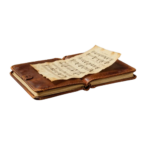
Then the war scatters everyone. Caleb’s uncle takes a Confederate commission to protect his family and his shop, and Caleb, a Philadelphian, follows him into gray as a scout thinking he can help protect his uncle and those he loves. Virgil is taken to war as an officer’s body servant. On his last night in Richmond, Caleb takes out his notebook and tears out every page that names the people he loves and burns them, keeping only the music. He copies the twenty-four notes onto a single loose page, unsigned.
What happens to that page on a road east of Richmond is left for readers to discover. The notes pass from hand to hand and camp to camp until they reach the names the official record kept. The final chapters follow Nora in Philadelphia and Jubilee in Richmond, each carrying part of a song neither will finish.
An Author’s Note sets the documented history beside the long-circulating legend the novel builds on, and marks plainly where the story departs from the record.